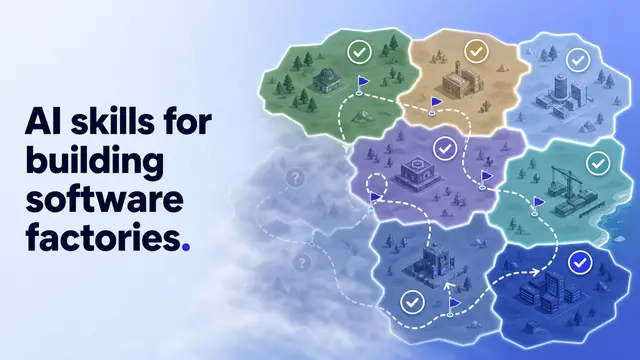
Explore Unknowns
Guide the user through a quadrant walk that maps the unknowns of a task, open by...
Install
npx skills add dzhng/skills --skill explore-unknowns -g -a claude-code -y- Repository
- dzhng/skills1.4k
- Category
- Writing
- Updated
- 3d ago
- License
- MIT
- Context cost
- Mediumabout 1,509 tokens
- Runs scripts
- No, instructions only
What it does
Guide the user through a quadrant walk that maps the unknowns of a task, open by listing the known knowns, then work through known unknowns, unknown knowns, and unknown unknowns one stage at a time, ending with a complete four-quadrant map in the user's hands. Use when a request is ambiguous or underspecified, the codebase or domain is unfamiliar, the user will "know it when they see it", a reference implementation must be understood before porting, mid-build deviations from the plan need capturing, or a finished change needs buy-in or verified understanding before merge. Pairs with [write-spec](../write-spec/SKILL.md), walk the quadrants to burn off fog before slicing, and feed the finished map into the spec.
Explore Unknowns
The map is not the territory. The prompt, the plan, and the context window are the map; the codebase, the domain, and the user's actual intent are the territory. The gap between them is the unknowns, and an unknown found before code is written costs minutes, while the same unknown found three PRs later costs the three PRs.
This skill is a guided conversation: the quadrant walk. Together with the user you fill in a four-quadrant map of the task, one quadrant per stage, and the user walks away holding the completed map. The map is the deliverable; implementation is a different task that starts only after the map is handed over.
Two moves apply at every stage:
- Reacting beats imagining. Never ask the user to describe what they want when you can hand them something concrete to react to, a rendered option, a clickable mock, a decisions table. Reacting extracts knowledge the user has but cannot articulate unprompted.
- Every artifact assembles the reply. End each artifact with the user's next message pre-drafted: steal/skip chips, resonate checkboxes, a decisions table, a copyable sharpened prompt, so their reaction becomes their next message with near-zero typing.
The Quadrant Walk
Five stages, walked in order, one at a time. When you enter a stage, read its reference file and follow it. Name the current quadrant as you go, the user should always know where they stand on the map, and finish the stage in front of you before opening the next.



