README Bootstrap
Creates directory README files across a repository subtree.
Install
npx skills add google/elephant-goldfish-model --skill egm-bootstrap -g -a claude-code -y- Repository
- google/elephant-goldfish-model8.9k
- Category
- Engineering
- Updated
- 3d ago
- License
- Apache-2.0
- Context cost
- Mediumabout 3,000 tokens
- Runs scripts
- No, instructions only
What it does
Bootstrap directory README.md files across a repository subtree.
EGM Peanuts and Hay Bootstrap (egm-bootstrap)
When running in Codex or ChatGPT Work, first read Codex integration.
In Claude Code or Cowork, read ${CLAUDE_PLUGIN_ROOT}/docs/claude.md first.
Overview
This skill automates the creation, correction, formatting, and correctness
verification of Elephant-and-Goldfish Model (EGM) compliant README.md files
across a directory tree. It establishes clear architectural contracts
(interfaces, invariants, and side effects) for both human developers and AI
assistants.
- Peanuts: Leaf-level Component Package READMEs containing specific file contracts.
- Hay: Parent-level Repository Blueprints that roll up child interface contracts into high-altitude indexes.
Delegation
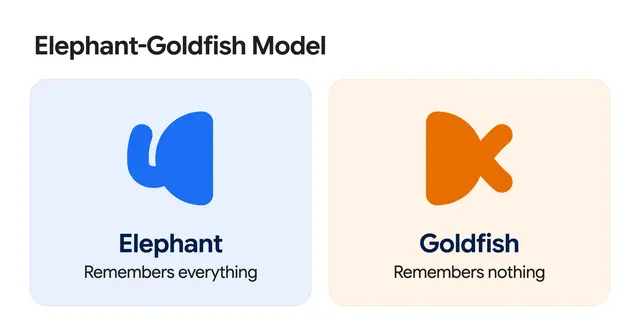
A Goldfish runs in a fresh context with no conversation history. Spawn each
subagent with your harness's subagent tool (Antigravity: invoke_subagent; Claude Code: Agent; Codex: spawn_agent). Each subagent is defined in agents/<file>.md, and its
frontmatter name (for example egm-zoom-out) is the subagent type to request
where your harness registers named subagents. Otherwise spawn a general-purpose
subagent and tell it to read that persona file first. Pass the prompt verbatim
and wait for the report. If your harness cannot nest subagents,
use direct dispatch instead of the synthesizer. See docs/harnesses.md.
If your harness has no subagent tool, run the scout steps inline.



