Egm Review Loop
Executes the Antagonistic-Review process from the Elephant-Goldfish Model (EGM) via an...
Install
npx skills add google/elephant-goldfish-model --skill egm-review-loop -g -a claude-code -y- Repository
- google/elephant-goldfish-model8.9k
- Category
- Design
- Updated
- 3d ago
- License
- Apache-2.0
- Context cost
- Mediumabout 2,321 tokens
- Runs scripts
- No, instructions only
What it does
Executes the Antagonistic-Review process from the Elephant-Goldfish Model (EGM) via an automated multi-agent review loop to audit documents against qualitative standards and structural templates, and automatically apply approved fixes. Use when reviewing design docs, READMEs, feature specifications, implementation plans, or verifying document completeness and tone.
Goldfish Review: Loop (Orchestration Driver)
When running in Codex or ChatGPT Work, first read Codex integration.
In Claude Code or Cowork, read ${CLAUDE_PLUGIN_ROOT}/docs/claude.md first.
Overview
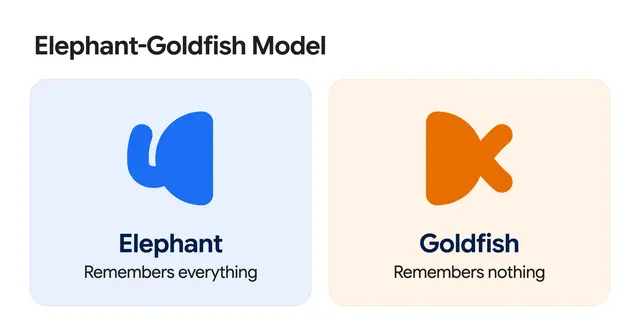
This skill acts as the central orchestration engine driving the multi-agent review loop. It coordinates two distinct agent memory models:
- The Goldfish (Adversarial Auditors): Subagents spawned in isolated, fresh context windows to catch unstated assumptions without historical bias.
- The Elephant (Persistent Resolver): The primary agent context holding institutional knowledge to evaluate findings and apply approved repairs.
The driver manages argument intake, resolves paths for reviewers and standards, unconditionally re-parses target line ranges before every iteration, spawns concurrent specialized Goldfish auditors based on configuration, and coordinates with the Elephant context to resolve findings.
Delegation
A Goldfish runs in a fresh context with no conversation history. Spawn each
subagent with your harness's subagent tool (Antigravity: invoke_subagent; Claude Code: Agent; Codex: spawn_agent). Each subagent is defined in agents/<file>.md, and its
frontmatter name (for example egm-zoom-out) is the subagent type to request
where your harness registers named subagents. Otherwise spawn a general-purpose
subagent and tell it to read that persona file first. Pass the prompt verbatim
and wait for the report. If your harness cannot nest subagents,
use direct dispatch instead of the synthesizer. See docs/harnesses.md.
If your harness has no subagent tool, stop and tell the user: a review in the same
context is not a Goldfish review.
Inputs
The caller or user provides exactly these parameters:





