Create Photo Flipbook UI
Create editorial photo zines and photobooks by exploring creative concepts, editing and...
Install
npx skills add HaichaoLihc/create-photo-flipbook-ui --skill create-photo-flipbook-ui -g -a claude-code -y- Repository
- HaichaoLihc/create-photo-flipbook-ui623
- Category
- Media
- Updated
- 15d ago
- License
- MIT
- Context cost
- Mediumabout 1,668 tokens
- Runs scripts
- Yes, review before use
What it does
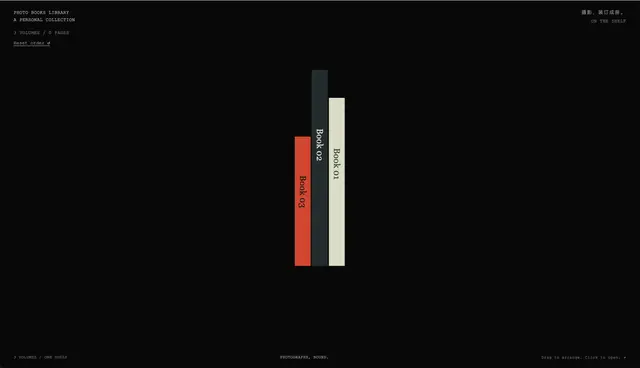
Create editorial photo zines and photobooks by exploring creative concepts, editing and composing photographs into pages, generating every spread with ImageGen, and building a local 3D hardcover book. Use for photobooks, photo zines, and artist books from photos, image folders, or visual references.
Photobook Art Direction
Create a photobook through the stages below. Honor the user's scope and keep source files intact. SKILL_DIR is the directory containing this file.
Every finished spread must be generated with ImageGen. This includes the outside cover and interior spreads containing title pages, endpapers, colophon, or intentional blank space. Generate each spread as one complete page layout, which may contain distinct photographs, type, graphic elements, and unprinted space. One generated file does not imply one continuous illustrated scene. HTML/CSS serves as the reader, not a substitute for spread generation. This requirement applies to the default and requested styles unless the user explicitly overrides it. If ImageGen is unavailable, report the limitation rather than silently delivering a different production method.
1. Understand the photos
Goal: discover the collection's character and possibilities. Inspect the photos for subjects, light, color, recurring forms, gestures, textures, contrasts, and unexpected relationships. Ground the later ideas in specific images and details.
Available tools: semantic photo search and contact sheets.
2. Explore creative directions
Goal: invent a book that could only grow from this collection. Explore ideas before committing to a palette, cover, layout system, or sequence.
Read creative ideation. For an open brief, develop several genuinely different concepts (usually three), including how each would change the theme, image presentation, motifs, material, typography, cover, and page turns. Use knowledge of books, printmaking, cinema, illustration, and other arts to invent editorial relationships. Different colors on the same layout are not different concepts; neither are different metaphors rendered as the same full-spread montage.