Qi Layer
Use when writing or maintaining AGENTS.md, .context/CONTEXT.md, or a Claude-specific...
Install
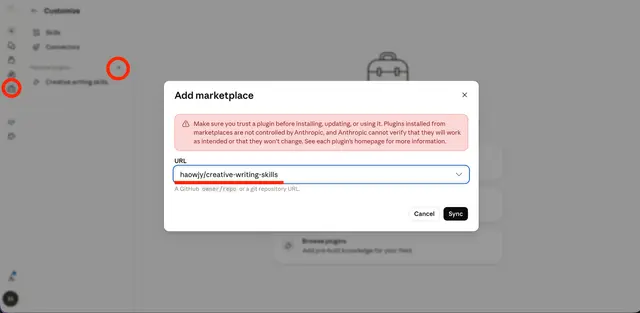
npx skills add haowjy/creative-writing-skills --skill qi-layer -g -a claude-code -y- Repository
- haowjy/creative-writing-skills556
- Category
- AI and agents
- Updated
- 8d ago
- License
- Apache-2.0
- Context cost
- Lightabout 1,238 tokens
- Runs scripts
- No, instructions only
What it does
Use when writing or maintaining AGENTS.md, .context/CONTEXT.md, or a Claude-specific CLAUDE.md: keep intent docs minimal and load-bearing.
qi-layer
/creative-writing-skills:qi-maintenance owns when colocated knowledge must move with the changes it describes.
This skill owns how to write and structure that knowledge.
Load /creative-writing-skills:knowledge-layers for where each layer lives and what it holds.
Load /creative-writing-skills:llm-writing if it isn't already loaded.
This skill is about how to write and maintain the directory-local pair:
AGENTS.md and .context/CONTEXT.md. The pair governs any tree agents work
in, code, the KB, docs, work directories. AGENTS.md loads into an agent's
bounded context as standing instructions: write it like a prompt, minimal,
every line load-bearing.
The Four Principles
- Fractal Compression: leaf AGENTS.md summarizes its directory's content; parent AGENTS.md summarizes its children. Each level is a compression of the level below.
- Hierarchical Summarization: root provides broad architectural frame. Leaves provide local working knowledge. Agents accumulate understanding as they descend.
- LCA Deduplication: shared knowledge appears once at the shallowest node covering all relevant paths.
- Progressive Disclosure: give just enough to work correctly at this
level. Link to
.context/CONTEXT.mdfor depth.
Writing AGENTS.md
Agents read AGENTS.md before opening anything else in the tree, write for that moment. Ask: what must someone understand before working here? That's what AGENTS.md captures.
Keep AGENTS.md as short as the directory allows, rarely past 200 lines. Include only what has substance:
- Purpose: what this area IS and what it ISN'T (1, 3 sentences)
- Mental model: how to think about this area, key abstractions
- Key rules: constraints, what breaks if you get it wrong
- Anti-patterns: what NOT to do here
- Downlinks: to
.context/for depth, to related areas