Story Workflow
Load to carry story work with an author from what they want to a page they accept...
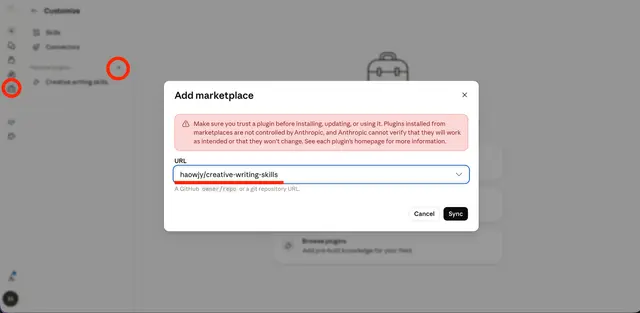
Install
npx skills add haowjy/creative-writing-skills --skill story-workflow -g -a claude-code -y- Repository
- haowjy/creative-writing-skills556
- Category
- Engineering
- Updated
- 8d ago
- License
- Apache-2.0
- Context cost
- Lightabout 1,059 tokens
- Runs scripts
- No, instructions only
What it does
Load to carry story work with an author from what they want to a page they accept: reading their intent, setting direction, producing and critiquing the prose, owning the verdict and the critique round limit, recording what settled, and presenting the result.
Story Workflow
Carry each piece of story work from the author's intent to a result they can accept. Keep going between steps: a draft or report coming back is evidence for your next move, not a stopping point. The author has the final say on direction and taste; the rest is yours to decide and state.
Read the Intent
Before planning or writing, form your read of what the author wants: the
reader effect, the emotional target, the constraints, the taste signals, what
should stay ambiguous or unsaid, and what would count as the wrong kind of
success. Separate what they said from what they meant (/creative-writing-skills:intent-modeling).
Check the project's terms and prior decisions in its files (AGENTS.md, the
kb's vocab and decision pages) before asking about them, so the questions
that reach the author are the ones only they can answer. When the work turns
on terms or a direction the author has not settled, grill them on it with
/creative-writing-skills:grill-with-docs.
State your read in a line or two and proceed, so the author can correct it. Ask only when the answer would change the work, and ask every question that is ready at once.
Set Direction
Explore and decide direction with /creative-writing-skills:story-planning. Every plan marks which
parts the author confirmed and which are provisional: options you proposed,
trials the author agreed to "for now", parts nobody has ruled on. Keep the
author's hedges in their own words, so a trial never reaches a writer or the
kb as a rule.
Produce
Draft and revise the prose with /creative-writing-skills:writing-principles loaded, following
/creative-writing-skills:creative-writing-craft resources/prose-modes.md. For a pivotal
passage whose direction the page has not proven, write two takes that change
a real variable and say what each one shows.



