RuiC Card Skill
Generate interactive 3D holographic collectible-card websites from a user description...
Install
npx skills add HRuiCcc/RuiC-card-skill --skill RuiC-card-skill -g -a claude-code -y- Repository
- HRuiCcc/RuiC-card-skill627
- Category
- Media
- Updated
- 3d ago
- License
- See repository
- Context cost
- Mediumabout 2,612 tokens
- Runs scripts
- No, instructions only
What it does
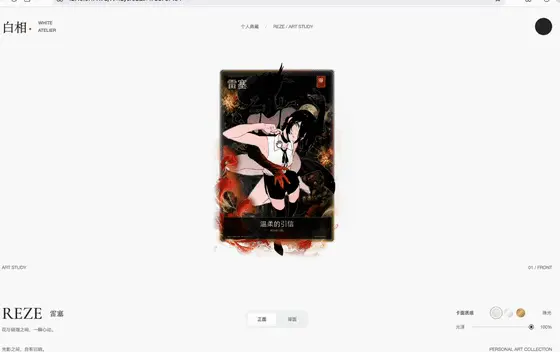
Generate interactive 3D holographic collectible-card websites from a user description or reference image, using layered artwork, Blender and Three.js. Includes project-local Blender installation, reusable parallax materials and browser verification. Host-agnostic, any harness that runs a multimodal model can use it, since the model draws the layer artwork and inspects the rendered frames. Use when the user asks for 全息闪卡, 镭射卡, 3D 卡牌网页, a holographic collectible card site, or an editable card.blend.
RuiC Card Skill
Turn the user's description or uploaded reference into a finished, editable Blender card and an interactive Three.js page. Preserve the requested subject, style, typography and destination. This skill contains code and text only; generated artwork belongs in the user's output project. It is host-agnostic, nothing in it is specific to one harness or one vendor's model, and it needs a multimodal model: you produce the layer artwork and you look at the rendered frames, so the host has to be able to generate and inspect images.
The layer stack
All layers share one canvas, normally 1024×1536 portrait. Each layer has one job and one depth, and the depth differences are what make the card read as stacked planes instead of one flat picture.
| layer | file | job | depth |
|---|---|---|---|
| subject | assets/subject.png | the character or hero object, real alpha, composited over the background | subjectDepth (0.4) |
| effects | assets/effects.png (optional) | a pre-cut decorative overlay, petals, sparks, thorn work, that floats between the subject and the typography | effectsDepth (0.5 forward, or negative to sink it) |
| background | assets/background.png | the opaque environment behind everything | backgroundDepth (−0.25) |
| lineart | assets/lineart.png | dark contours on white; drives the glowing ink glints that appear inside the subject's silhouette | follows the subject |
| text | assets/text.png | typography and card furniture. The viewer samples this layer without parallax, so a border or frame painted here stays nailed to the card edge | 0 |
Give the layers clearly different depths. Two layers at the same depth fuse into one plane and the parallax stops reading as depth; that is the single most common way a card ends up looking flat.