Publicity Distribution
Write and distribute launch and publicity content across LinkedIn, X/Twitter...
Install
npx skills add Leanmcp/gateway-skills --skill publicity-distribution -g -a claude-code -y- Repository
- Leanmcp/gateway-skills2.1k
- Category
- Writing
- Updated
- 28d ago
- License
- MIT
- Context cost
- Mediumabout 1,637 tokens
- Runs scripts
- No, instructions only
What it does
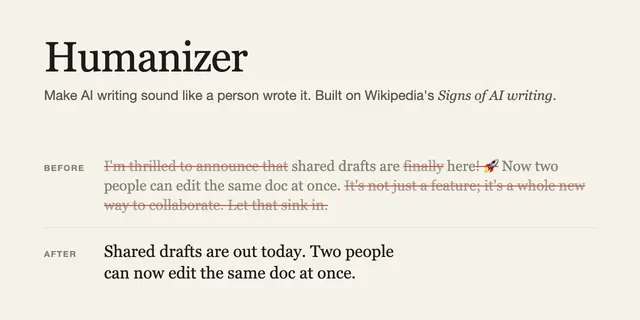
Write and distribute launch and publicity content across LinkedIn, X/Twitter, Instagram, Discord, Medium, Substack, and YouTube. Produces per-platform copy that does not read as AI-written (no em dashes, no "thrilled to announce", no engagement-bait), plus the exact image/video specs and character limits each platform wants. Use this skill whenever the user wants to announce, launch, publicize, promote, cross-post, or share anything - a product, a feature, an open-source release, a research paper, a blog post, a demo video, a milestone, a job opening, or a conference talk. Trigger it on phrases like "post this on LinkedIn", "write a launch tweet", "announce this", "share this in Discord", "turn this into a thread", "what should I post", "write a Medium article about", "help me with distribution", "draft a YouTube description", "make this sound less like AI", or "de-slop this post". Also use it when the user has just finished shipping something and asks how to get it in front of people.
Publicity and Distribution
Shipping something is half the work. This skill covers the other half: turning one thing you built into channel-native copy that people actually read, without it smelling like it came out of a language model.
The two failure modes
Almost all bad launch content fails in one of two ways:
- It reads as AI-written. Em dashes, "I'm thrilled to announce", rocket emojis, three perfectly parallel bullets, a closing question nobody will answer. Readers on LinkedIn and X have been trained to spot this in under a second and they scroll past it or, worse, mock it in the comments. Fixing this is not optional and it is not cosmetic.
- It is the same paragraph pasted five times. A LinkedIn post and a tweet and a Discord message are different formats for different rooms. Copying one into the other five places is visible and it is lazy.
Everything below exists to avoid those two things.
Workflow
1. Build the fact sheet first
Before writing any post, collect the raw material in one place. Do not skip this. Almost every weak post traces back to a writer who had nothing concrete to say and padded with adjectives.
Ask for or dig out:
- What exactly shipped, in one plain sentence a stranger would understand
- Who it is for, specifically (not "developers", but "people running evals on self-hosted models")
- The single most surprising number, before/after, or constraint (latency, cost, lines of code, time saved, accuracy)
- What was hard or what broke on the way. This is the most valuable item on the list and the one people forget to ask for.
- What it does NOT do yet
- The link, the repo, the paper, the demo
- Who else worked on it, by name
If the user cannot supply a concrete number or a real story, say so and ask for one rather than inventing filler. Never fabricate metrics, user counts, benchmark results, or quotes. If a number is unverified, leave a clearly marked [NUMBER?] placeholder in the draft instead of guessing.