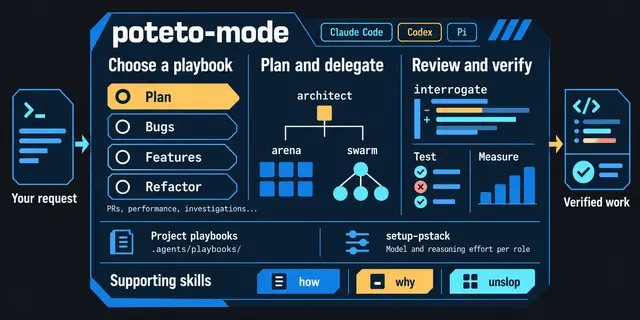
Swarm
Fan out N parallel workers, drain them, and return one report.
Install
npx skills add michael-denyer/pstack-claude --skill swarm -g -a claude-code -y- Repository
- michael-denyer/pstack-claude3.7k
- Category
- Engineering
- Updated
- 5d ago
- License
- MIT
- Context cost
- Lightabout 1,052 tokens
- Runs scripts
- No, instructions only
What it does
Fan out N parallel workers, drain them, and return one report. Use for /swarm, 'swarm this', or parallel coverage, races, gauntlets, and exploration.
Swarm
On Codex, read the platform mapping, including its per-skill notes, before following this skill.
On GitHub Copilot, read the platform mapping, including its per-skill notes, before following this skill.
On Muse, read the platform mapping, including its per-skill notes, before following this skill.
Start
Open a todolist with one entry per phase before launching anything.
- Frame
- Fan out
- Aggregate
- Report
Phase A: Frame
- State the done predicate and the artifact or report the swarm must return.
- Choose the shape. Partition into slices, race N workers on identical briefs, or mix both. For a race or mixed shape, declare
first pass,rank all, orbest-ofbefore spawning. - Pick the worker model from the
swarm workersline inpstack-models.md. If the sheet or that line is missing, use the default in Models. Forautoorinherit-parent, omitmodelso the workers run on the parent model. If theAgenttool rejects a slug, use the default and say so. If it rejects the default, use the closest valid slug of the same family from its error message. For a model race, name each arm's model up front. Pick each subagent's reasoning level for the job, per the Subagents section of the poteto-mode skill. - Give each worker its own writable output when it writes. When workers verify or measure commits, each brief names the exact SHAs. A measurement brief also names the method (sample count, what one sample is, order). The worker records both in its result.



