Codegraph
Analyze indexed codebases via graph database (neug) and vector index (zvec).
Install
npx skills add QwenLM/qwen-code --skill codegraph -g -a claude-code -y- Repository
- QwenLM/qwen-code28.9k
- Category
- Data and ML
- Updated
- 3d ago
- License
- Apache-2.0
- Context cost
- Mediumabout 3,000 tokens
- Runs scripts
- No, instructions only
What it does
Analyze indexed codebases via graph database (neug) and vector index (zvec). Covers call graphs, dependencies, dead code, hotspots, module coupling, architecture reports, semantic search, impact analysis, bug root cause from GitHub issues, class diagrams (UML), and PR review (risk scoring, conflict detection, auto-merge candidates, labeling). Also covers creating, inspecting, and repairing a CodeScope index. Use for: code structure, who calls what, why something changed, similar functions, module boundaries, bug tracing, class relationships, PR risk/conflicts, or any question benefiting from a code knowledge graph. Applies when a `.codegraph` index exists in the workspace, or when the user wants to create one.
CodeScope Q&A
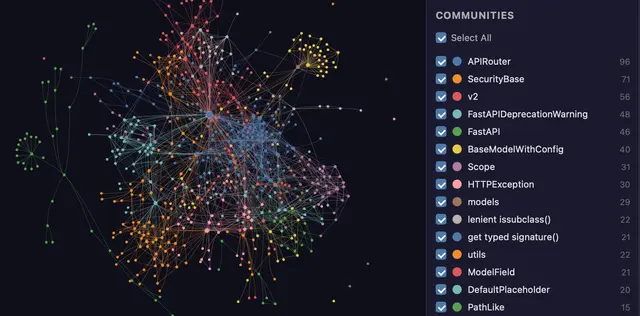
CodeScope indexes source code into a two-layer knowledge graph, structure (functions, calls, imports, classes, modules) and evolution (commits, file changes, function modifications), plus semantic embeddings for every function. Supports Python, JavaScript/TypeScript, C, and Java (including Hadoop-scale repositories with 8K+ files). This combination enables analyses that grep, LSP, or pure vector search cannot do alone. It can also fetch GitHub issues and trace bugs to code, and review open PRs, scoring per-PR risk, detecting cross-PR conflicts, identifying auto-merge candidates, and applying GitHub labels.