Graft Code Index
Looks up code context in the graft index before grepping for symbols or edit scope.
Install
npx skills add trailhq/Trail-Code --skill graft -g -a claude-code -y- Repository
- trailhq/Trail-Code11k
- Category
- Engineering
- Updated
- 3d ago
- License
- MIT
- Context cost
- Mediumabout 2,192 tokens
- Runs scripts
- No, instructions only
What it does
This repo is indexed by graft/. For ANY task here, whether understanding how something works, finding where code lives, tracing what calls a symbol or what a change breaks, or scoping an edit, get your context from graft before grepping or reading source files.
graft
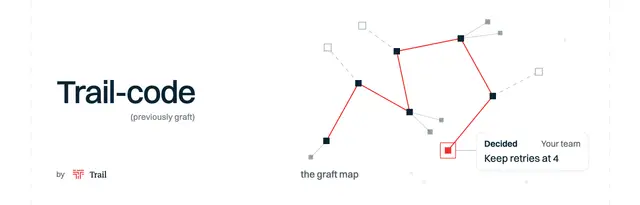
graft/ holds a graph of this repo: small markdown nodes that each explain one
part in prose and name the exact file:line spans they cover, plus a wiring
graph of who-calls-what. Querying a node costs a few hundred tokens; rebuilding
that understanding by reading source costs thousands, and misses the edges.
Every command below is $0, needs no API key, and returns in under a second.
There are six of them. Pick the one that fits the task, run it, act on the
answer; don't chain tools hoping for more. Most tasks need one call.
The tools
1 · graft ask "<question>" --source: locate + understand (the default)
Ranked retrieval over the graph, routed automatically between prose nodes and
the wiring graph, returning the top hits with exact file:line.
--sourceinlines the code at each hit, the ≤8-line crux of each definition, so the result IS the code you need, no follow-up file read. Add--fullonly when the crux is too small to act on.--in <path>narrows to a subtree before ranking;-n Ncaps results (default 8).- Use it when the question is conceptual or locational: "how does auth work", "where is rate-limiting handled", "what assembles the request pipeline".
- One ask usually answers. A genuinely multi-part question needs one ask per distinct sub-aspect, never the same question reworded. Few or weak hits mean switch tool (grep / skeleton / callers), don't re-ask.



